
Welcome to My Exploration of Free surface flow simulation
Importance
Numerical simulation of fluid flow with free surfaces plays a crucial role in various scientific and engineering fields. This technique allows us to understand the complex interactions between fluids and their boundaries, particularly when dealing with systems where free surfaces are present. Whether in environmental studies, industrial applications, or biomedical engineering, the accurate prediction and analysis of fluid behavior can lead to enhanced designs, improved efficiency, and sustainable solutions.
One significant application lies in the analysis of fluid dynamics in systems where fluid is injected into air against the force of gravity. This scenario is prevalent in various sectors, including chemical processing, agriculture (e.g., pesticide spraying), and environmental engineering (e.g., pollutant dispersion). Understanding how fluids behave in these conditions, particularly under laminar flow regimes, is essential for optimizing processes and ensuring safety.
Problem Definition
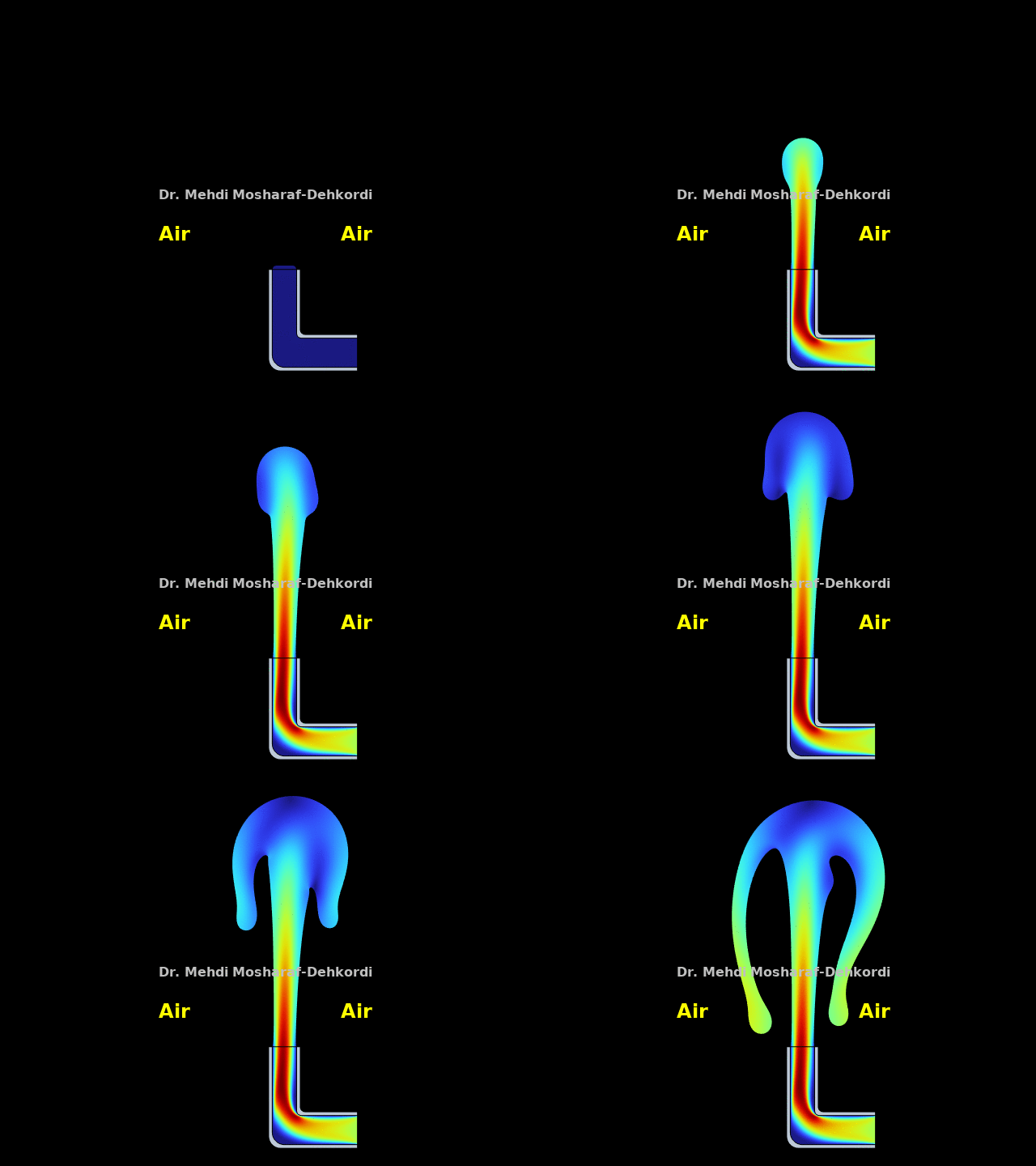
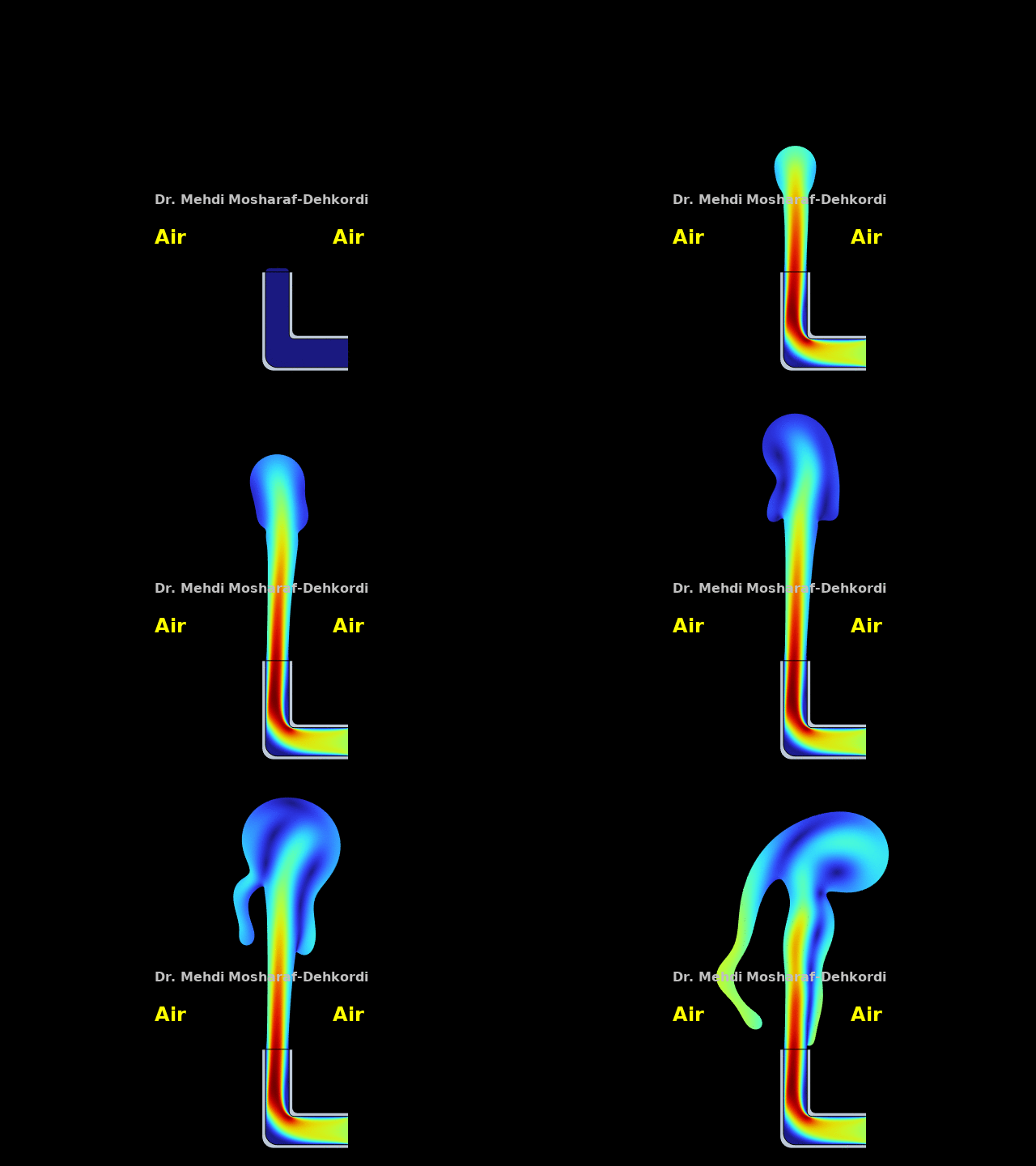
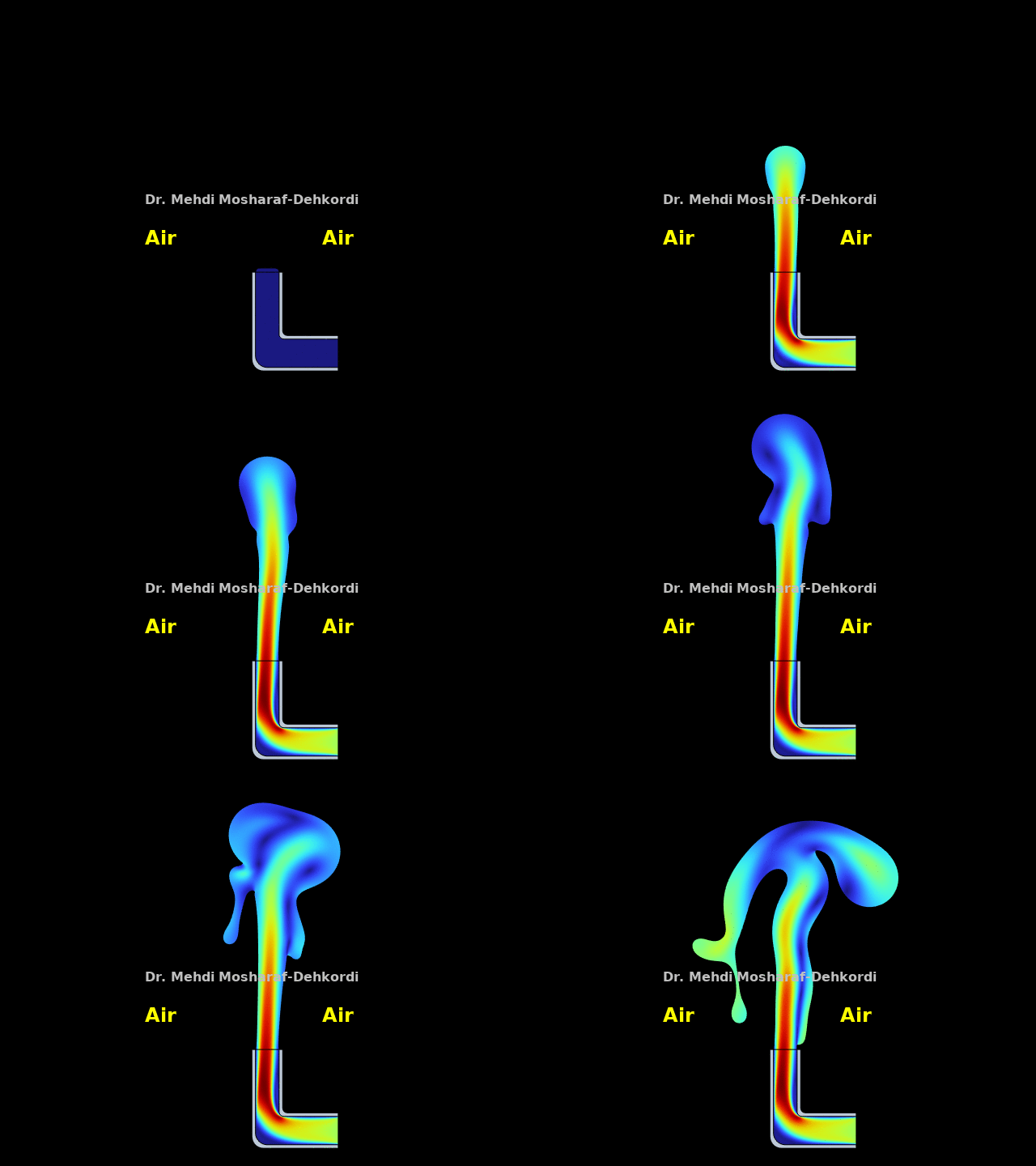
When a highly viscous Newtonian fluid is injected into the air through an elbow-shaped duct in a vertical direction opposite to gravity, the resulting fluid dynamics exhibit complex interactions between the fluid and the surrounding air. As the fluid moves upwards, gravitational forces contend with the inertial forces of the injected fluid. Eventually, there is a critical point where gravitational forces overpower the inertial forces, leading to a portion of the fluid being accelerated downwards.
Assumptions, initial and boundary conditions
Boundary Conditions:
- No-slip Condition: Applies at the internal boundaries of the elbow-shaped duct, meaning the fluid adheres to the surface and has zero velocity at the boundary.
- Inlet Conditions: The fluid velocity is specified at the inlet, while the pressure exerted on the free surface is also defined.
Initial Condition:
- The fluid starts to flow from a state of rest.
Solution Approach and Computational aspect
To simulate fluid dynamics in an elbow-shaped duct, I utilized the finite element method (FEM) with a focus on adaptive mesh strategies. First, I created a 2D model of the duct. The governing Navier-Stokes equations are implemented to model the flow of a viscous Newtonian fluid. Then, an adaptive mesh, particularly around fluid-air interfaces, ensures precision in capturing dynamic behaviors, while a moving mesh approach aligns mesh nodes with fluid movement. Accurate boundary conditions and an appropriate time-stepping scheme are crucial for stability.
Numerical Results
Just take a moment to admire the graceful dance of the fluid’s surface!
Notes
Advanced numerical simulations allow researchers and engineers to visualize flow patterns, predict potential issues (like cavitation or turbulence onset), and explore various scenarios without the need for extensive physical prototypes. This capability not only saves time and resources but also enhances the understanding of fluid dynamics in a controlled virtual environment.
Ultimately, numerical simulations of fluid flow with free surfaces are indispensable for the development of innovative solutions and technologies, enabling precise control over fluid behavior in diverse applications.